How Martha Stewart Made a Bad Halloween Costume Worse
Some experts say a “good apology” has six steps. The media and marketing maven stumbled over all of them.
You should certainly consider Martha Stewart’s advice on how to set the table for your Thanksgiving dinner party, pare down a list of wedding guests or politely eat lobster without making a mess.
But when it comes to making apologies, you’d be better off looking elsewhere.
The 85-year-old expert on entertaining and homemaking struggled to express regret for a Halloween social media post in which she wore a homeless person costume she had crafted. With her evasive, shifting accounts of what happened over nearly a week, Stewart inadvertently proved the truth of one thing she did say: “It’s hard to admit when you’ve really screwed up.”
It doesn’t need to be so hard, either for celebrities or corporations.
A “good apology” has six steps, according to Adam Galinsky, a professor at the Columbia Business School, and Maurice Schweitzer, a professor at the Wharton School of the University of Pennsylvania.
“The simple words ‘I’m sorry’ are surprisingly powerful,” they write on the Wharton news site. “But how we say them and what we do as we say them can make a world of difference.”
Yet Stewart failed at that task, even though she probably has plenty of good advice available to her. She presides over Martha Stewart Living Omnimedia, which has 181 employees, according to workforce research company Revelio Labs.
With nearly 750,000 people without housing nationwide, her post struck a nerve by highlighting the gap between rich and poor.
The professors’ six steps are:
1. Speed.
2. Candor.
3. Vulnerability.
4. Focus on the victim.
5. Promise to change.
6. Penance.
Those steps echo advice we give clients in need of crisis communications planning. Let’s take a close look at the timeline of the controversy, which started the day before Halloween.
Friday, Oct. 30 In a Halloween baking segment at the end of a “Today” broadcast, Stewart shrieks when co-anchor Craig Melvin spills small amounts of chocolate ganache on her.
Melvin, dressed as Snoop Dogg, is reprising the entertainer’s role as an Olympic commentator. Stewart and Dogg teamed up on bits for the 2026 and 2024 games.
Stewart dresses simply in white pants and a white sweater with the Olympic rings and American flag. In previous holidays, she has highlighted her elaborate costumes. This year, she was too busy to plan a costume, she said later.
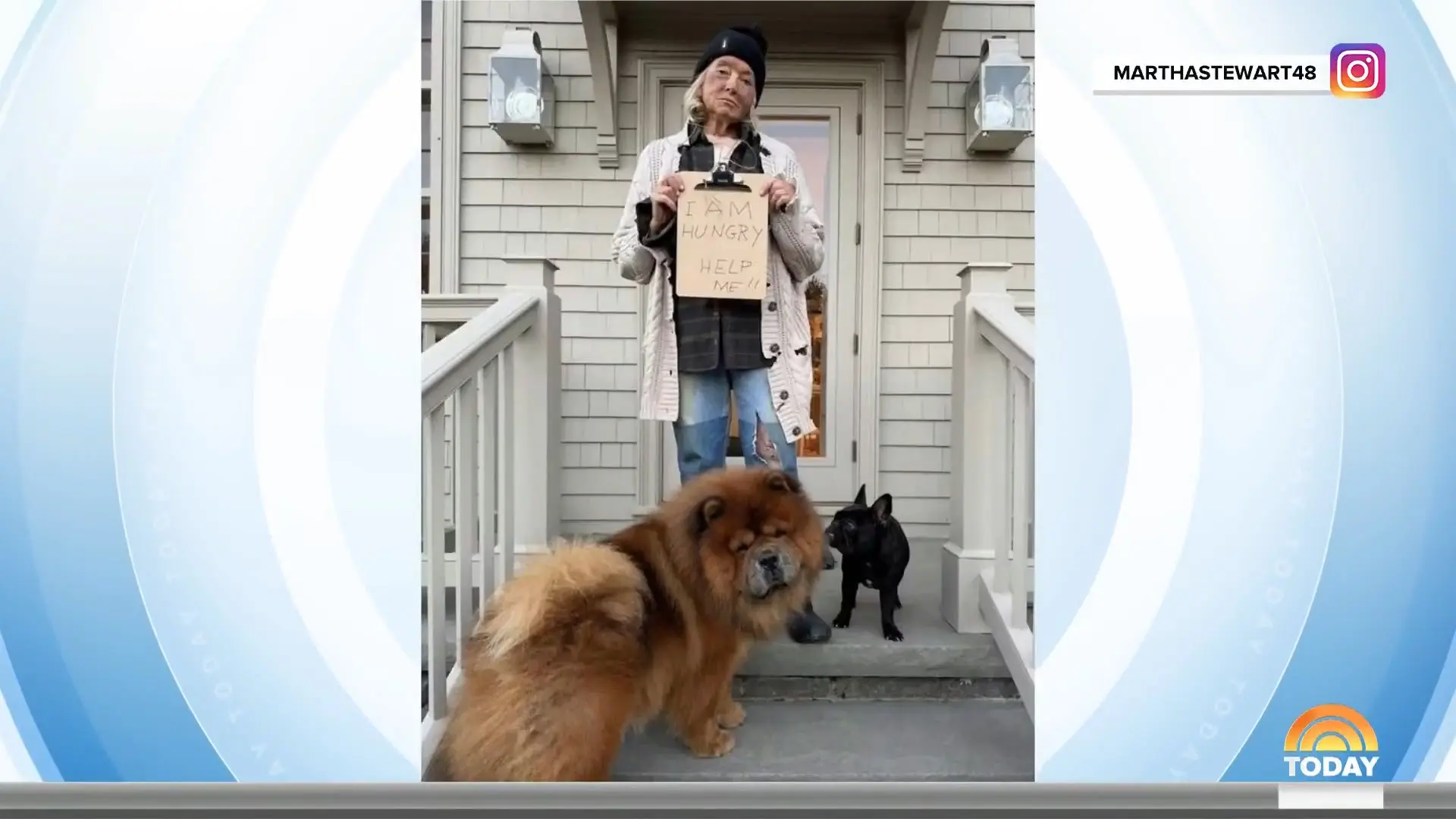
Saturday, Oct. 31: Stewart posts to Instagram a carousel of three photos touting candles that are “perfect for Halloween!!!” Two photos show candles with drawings of owls and bats. The third photo shows the “homeless” Stewart accompanied by one of her purebred French bulldogs and a chow chow.
As the backlash mounts, Stewart quickly takes down the post, but the criticism continues online as media outlets begin to pick up the story.
Our comment: Stewart takes down the post quickly, but without any explanation, which makes things worse.
“You post it, you own it,” we’ve said before.
She likely could have cut short the reaction by immediately issuing what became the second statement issued the next day.
“A prompt apology signals concern; a delayed one signals that the apologizer had to be pressed into it,” the business professors write.
Sunday, Nov. 1, 10:03 AM: Stewart issues her first statement, which celebrity news site Page Six reports:
“I’ve spent decades teaching others how to celebrate Halloween — sharing fun, festive recipes, providing unique craft ideas and giving tips on entertaining and hosting to make the most of one of my favorite holidays of the year.
“I am distressed that my Halloween costume yesterday, which was intended to bring more awareness to the very serious subject of homelessness, has offended people, which was never my intention.
“Homelessness continues to remain one of America’s greatest challenges and ongoing crises, something that I care deeply about and I have spent a significant amount of time and effort supporting charities that combat this ongoing social epidemic. I am committed to continuing to make a difference.”
The news coverage intensifies as the statement is picked up by other outlets.
Stewart’s explanation rings false to all but the most gullible readers. If she intended to draw attention to the problem, wouldn’t she have included some call to action?
Melvin later politely underscores her lack of credibility when he says, “There have been a number of different versions of the story.”
Our comment: Conflicting explanations can intensify the damage caused by the original crisis, which was the case when Southwest Airlines was forced to cancel thousands of flights in 2022.
Sunday, Nov. 1, hours later: Stewart issues a second statement on social media, saying:
“It’s hard to admit when you’ve really screwed up. My earlier statement didn’t go far enough. I know many people are suffering economically. Wearing a costume like I did was insensitive and not funny. I am very sorry. – Martha.”
Our comment: Stewart shows a modicum of vulnerability.
“A critical ingredient in rebuilding trust, vulnerability sends a powerful signal that the apologizer trusts the recipient of the apology and leaves him or herself open to the consequences of the original error,” the professors write.
Monday, Nov. 2: The news media catches up with the weekend’s news. A senior contributor to forbes.com generously accepts Stewart’s explanation that she was trying to draw attention to a social problem, writing, “The best intentions can lead to a crisis.”
CNN gives her the benefit of the doubt with the headline, “Martha Stewart says she ‘really screwed up’ with homeless Halloween costume.”
The New York Times publishes a story with the headline, “Martha Stewart Apologizes for Homeless Halloween Costume. Kind of.”
Tuesday, Nov. 3: As the coverage begins to wind down, Stewart makes a previously scheduled appearance at the sales conference for a mortgage lender. Apparently unprompted, she addresses the costume controversy, and her remarks were captured on a video that TMZ obtains:
“What’s his name on the Today show, Craig, he spilled chocolate all over my white sweater, which I was going to wear on Halloween night. When I picked up the sweater, I said, ‘Oh, God, it’s so dirty and I only have ten minutes left to get ready for this Halloween party.’ So, the easiest costume was to get dressed up as a bum.
“I looked at myself, I said, ‘You really look hungry and homeless.’ So I wrote a sign that said ‘I’m hungry,’ and boy, did that go off.”
The next day, TMZ puts this headline on its story: “Martha Stewart: Oops!!! Now It’s Craig Melvin’s Fault I Was a Homeless ‘Bum’ on H’Ween.”
Our comment: In her initial statement and in this television appearance, Stewart seems more focused on herself than on those she harmed, which are people without homes, and those she offended, her fans and followers who hold her to a higher standard of conduct.
It’s a common mistake.
“Most apologies are self-focused and therefore much less effective,” the professors write.
Nov. 6: Stewart returns to the Today show for a nearly 4-minute interview with Melvin, who says, “The story continues to make headlines.”
He tells Stewart, “You’re here to clear the air because there have been a number of different versions of the story.”
At first, she tells Melvin she didn’t have a costume “because you had spilled some chocolate on my white sweater, and I don’t blame you at all.”
Then she takes it back, saying that blaming him was a joke. “It was stupid.”
Melvin presses her, asking, “Why was I dragged into it?”
Stewart repeats that she was making a joke at the conference but says she had planned to wear the white outfit as a costume.
Melvin presses her again to confirm that there wasn’t a connection between his chocolate spill “and the costume later.” She agrees.
She apologizes for the social media post, saying that she did not intend to make light of homelessness.
Near the end of the segment, Melvin asks Stewart what lesson she has learned.
“Pay closer attention to social issues,” she says. “I’m aware of all those social issues, as you can imagine. And I care desperately about all the problems facing us.”
Our comment. In the television segment, Stewart immediately undercuts her promise to pay more attention by claiming she already pays attention.
In her first statement, Stewart says, “I am committed to continuing to make a difference.” But she doesn’t say what she’ll do.
A prompt promise to make things right would have shifted the media coverage from her social media post to what she would do to make amends.
Brand value
Any damage to Stewart’s reputation is likely fleeting. Even so, she missed an opportunity.
As Galinsky and Schweitzer say, “Quick, effective repair efforts can tip the balance back to a positive relationship, and even improve your image.”
And Stewart seldom misses a chance to put polish on her brand.
Tom Corfman, a senior consultant with Ragan Consulting Group, has enjoyed many recipes from Stewart’s breakthrough, 1982 book, “Entertaining.” His wife has a well-worn copy on the bookshelf in the kitchen.
Is your organization prepared for its next social media fiasco? We can help. Email Tom to set up a call with him and RCG co-founder and senior partner Jim Ylisela.
Follow RCG on LinkedIn and subscribe to our weekly newsletter here.