Don’t Take Our Word for It: Famous Authors’ Tips to Write Faster, Better
Two new books from a Southern California writers’ conference offer a simple formula — push ahead with a draft, then rewrite
Public relations and internal communication teams can learn a lot from the tips and tribulations of well-known writers, even if they work in completely different worlds.
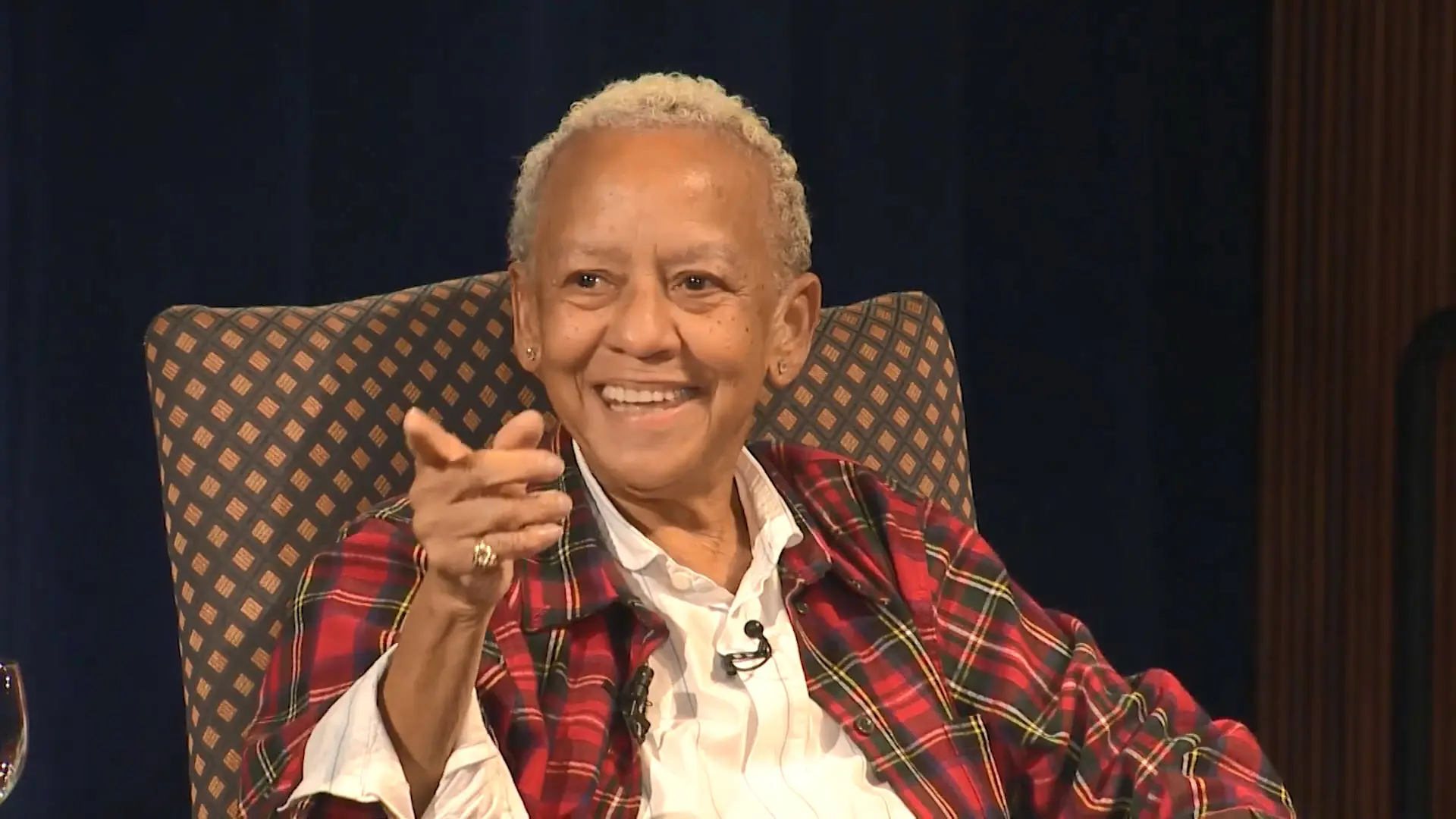
Consider the advice that activist and author Nikki Giovanni got when she started work on her collection of poems, “A Good Cry: What We Learn from Tears and Laughter.” She’d already published more than 20 books of poetry but that didn’t make the writing easy.
“I called Toni Morrison about a book I was working on, because I was feeling so bad,” she said while writing the book in 2016. “She’s an old, old, old friend. And I said, ‘Toni, I’m not making it.’ She’s somebody you could say that to. ‘I’m just not making it.’ We talked and talked. And she said, ‘Nikki, write it out.’ And it was good advice.”
PR and internal comms pros can take away an important lesson: Don’t worry about getting the first words right. Get a draft done. Then rewrite and revise.
(That’s a great tip, even if you didn’t get it from a Nobel Prize-winning author and expert editor.)
Giovanni, who died last year, told her story during the Writer’s Symposium by the Sea, an annual event held on the campus of Point Loma Nazarene University in San Diego that began in 1995. The highlight of the conferences are interviews of writers by Dean Nelson, the founder of the symposium and director of the school’s journalism program.
He has published two books that combine his essays with excerpts from his interviews. The books are “Talking to Writers: The Craft of Fiction,” and “Talking to Writers: The Craft of Nonfiction.”
The books offer many insights about the process of writing. But time and again, the writers say the way to write faster and better is to plow ahead with a first draft, then read it back, improving and tightening the copy. It’s sometimes easier said than done, as Giovanni revealed. Here’s how four writers do it in their own words.
Get it out
Don Winslow, who’s written more than 20 crime novels, described his process by invoking a saying that may or may not have its roots in Asian fighting disciplines.
“I write first drafts very fast,” he said in 2022. “There’s an old martial arts saying that I think applies to writing. It asks the question: How do you carve a tiger? The answer is, you get a big block of wood, and you carve away everything that doesn’t look like a tiger.
“That is the process, but first you need that big block of wood. You need that first draft that I need to write fearlessly. No judgment. Nothing.
You can’t sit and judge yourself as you’re writing. There’s too many people in the room. You can’t have that Jiminy Cricket character on your shoulder saying, ‘Ah, it’s an adverb!”
My colleague Jim Yliselia, senior partner with Ragan Consulting Group, has offered this bit of advice: “Use the CRAP method: Craft Really Awful Prose.”
The fun starts
If you find it hard to get a first draft done, you’re not alone. Many writers complain about how hard writing is. But most writers enjoy the next step.
“The greatest writer is a re-writer,” Michael Eric Dyson, a prominent scholar on race and an essayist, said during his 2011 interview. “Revision is critical. ‘No, that word didn’t do it, it’s too heavy on adjectives. Now let the verbs do more of the work . . . Now, the nouns carry some of the weight. The sentence is a train, where’s the caboose?’”
As my colleague Jim Ylisela says, “Rewriting is good for the soul.”
Mary Karr is best known for “The Liar’s Club” and “Cherry,” memoirs of growing up in a small Texas oil town. In 2011 she described how she boiled down the sequel to those books.
“With ‘Lit,’ my last book, I actually broke the delete key,” she said. “When you go into my apartment in New York there’s a computer on my desk and the delete key has been broken.”
Trimming a story is a key point in our report, “Self-Editor Checklist.”
The Lamott method
Anne Lamott, known for her memoirs, spiritual essays and social commentary, described her method of giving birth to copy.
In her 2024 interview, she described the three-step process she offered in “Bird by Bird: Some Instructions on Writing and Life,” which reportedly has sold more than a million copies since its publication in 1995.
The downdraft: “You just get it all down and it’s awful and it goes very badly and the writing is terrible and also it doesn’t amount to anything and also, you’re beating a dead horse.”
The updraft: “You clean it all up. You shape it up and you clean it up and you take away an easy third of it and you start to figure out filling holes that are left behind, and the shape is appearing to you by now.”
The dental draft: “You’re going through it and it’s like being more of a watchmaker at that point. It’s more craft at that point than spew and desperation and fixing and fixing and spackling and caulking and fixing. And I’m cutting and cutting…. That’s the draft I enjoy the most.”
Trust in the process
We enjoy writers talking about their craft because they often admit to the challenges that all of us face. During her 2016 interview, Giovanni questioned whether people would like “A Good Cry,” saying: “It’s uneven right now. It’ll probably stay uneven.”
When the book was published the next year, The Washington Post said, “The best writing here is surprising and poignant, and shows Giovanni’s strength and originality.”
The book turned out better than she feared.
Tom Corfman is a senior consultant with Ragan Consulting Group, who directs our Build Better Writers program. featuring workshops and one-on-one coaching and editing.
Want to learn how we can help your communications teams elevate their writing skills? Email Tom to set up a free call with him and partner Jim Ylisela.
Follow RCG on LinkedIn and subscribe to our weekly newsletter here.