Anne Lamott Finds a Partner for a New Book on Writing — Her Husband
Best-selling author Anne Lamott, whose 1994 book is a classic, lends pizzazz to Neal Allen’s rules for writing better sentences
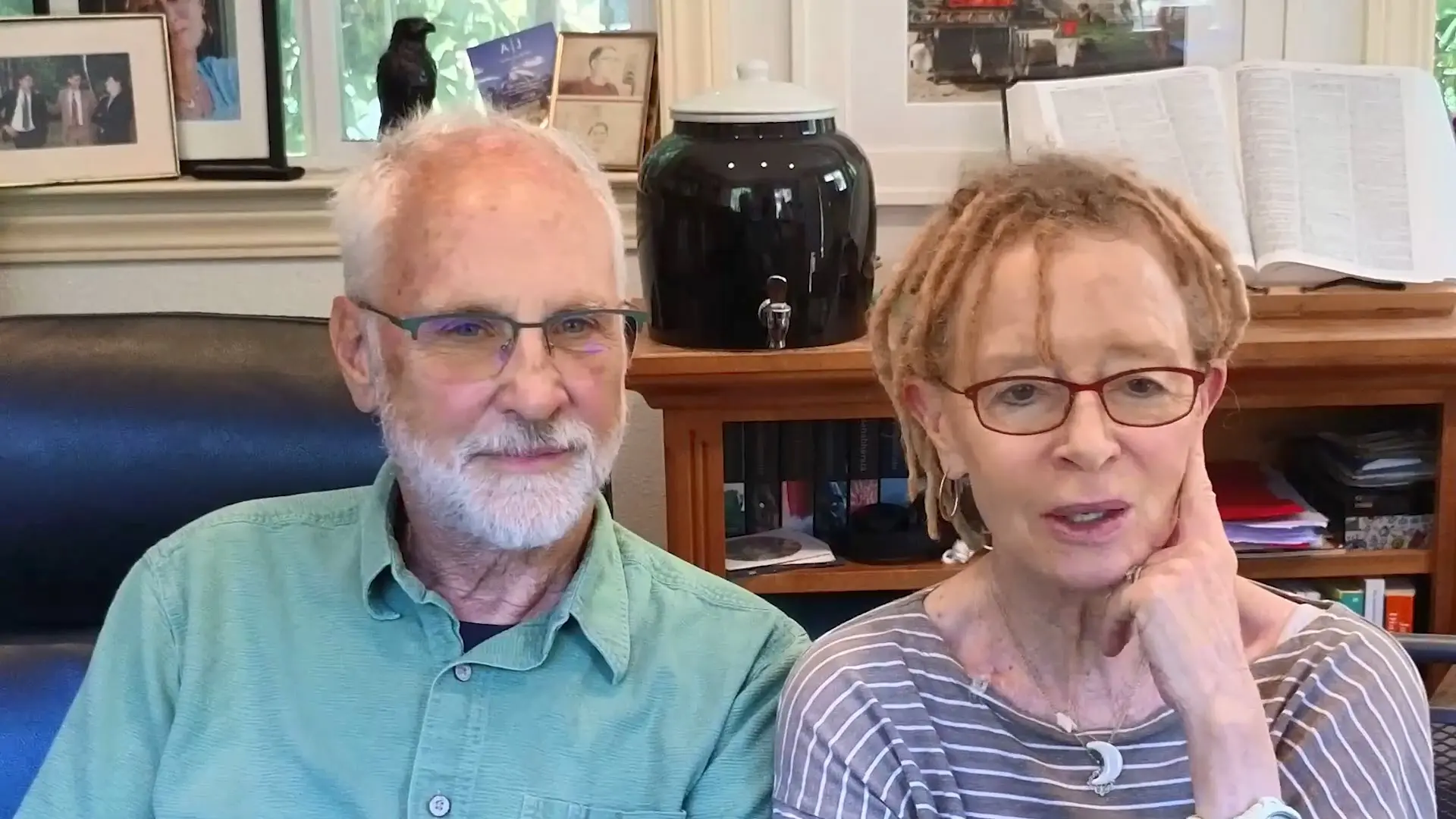
Anne Lamott, whose book on writing, “Bird by Bird,” has sold more than 1 million copies, has teamed up on a new book of writing tips with her husband, Neal Allen, a former marketing and public relations executive turned spiritual coach, motivational speaker and author.
“Good Writing: 36 Ways to Improve Your Sentences,” published this month, reminds me of a quip by Stacey King, a broadcaster for the Chicago Bulls who played for the basketball team during three consecutive championships in the early 1990s.
In King’s first season in 1990, Michael Jordan scored a career-high 69 points in a win against the Cleveland Cavaliers.
After the game, King joked, “I’ll always remember this as the night that Michael Jordan and I combined to score 70 points.”
Before this book, Lamott has written 20 books. Allen, two.
Lamott has written both fiction and non-fiction, which features her liberal Christian perspective. Allen has written self-help books: “Shapes of Truth: Discover God Inside You” (2021), and “Better Days: Tame Your Inner Critic” (2023). Yet he offers a different perspective because of his corporate experience, including speechwriting and presentation creation.
In “Good Writing,” each chapter begins with Allen providing examples for one of 36 writing rules he has collected during his varied career. Then Lamott offers her view, adding context and occasionally challenging her spouse. Her comments sometimes outshine his explanations.
We’ve picked four of Allen’s 36 rules to highlight, combined with our own thoughts.
About Allen
After Allen graduated from college in the late 1970s, he worked as a reporter and editor at suburban dailies in upstate New York and northern New Jersey. He then became a publisher for several New Jersey weeklies.
After about 15 years, Allen moved into corporate communications, eventually becoming a vice president in San Francisco with McKesson, the large medical supplier. He left in 2011, becoming an executive coach.
Allen, 69, and Lamott, 71, met in 2016 and married the following year.
This 209-page book takes a narrower focus than Lamott’s 1994 classic, which is about the craft of storytelling and the profession of writer.
“My job is the sentence,” Allen writes in his introduction, “and secondarily the paragraph or flow, and only thirdly the content of what I have learned or am learning.”
Allen’s rules
Some of the rules are well known but well worth repeating: Use strong verbs and active voice, remove unnecessary pronouns and prepositions, eliminate “crutch words” such as “very” and “actually.” Here are some others:
1. “Short sells.” Interrupt long passages with a short sentence for emphasis. “Like this,” Allen writes.
The judicious use of a short sentence can have a dramatic effect or drive home a point. If a period is a full stop, then a short sentence acts like a stoplight. It can make the reader think or if it’s a punchline, make the reader laugh.
Lamott cites the probably apocryphal story about Calvin Coolidge, who was famously terse. At a dinner party, a woman said she had made a bet that she could get him to say more than two words.
“You lose,” he said.
2. “Twist clichés.” On a first draft, don’t be afraid to write the first thing that comes to mind, which will probably be a cliché, then go back and change it, Allen writes.
“Clichés make readers stop reading,” we wrote recently, especially when they come in one sentence after another and another.
Confronted with a cliché, sometimes you’ll have a flash of creativity. Like when Ian Fleming turned a Dutch proverb that dates back at least to the 17th Century into “Live and Let Die,” Allen notes.
Lamott thinks that her husband is a bit too rigid prohibiting clichés.
“Every so often, however, you simply need to use one of the lesser-known clichés, because there are only so many words and phrases in the English language,” she writes.
Sometimes creating a play on words out of a cliché isn’t worth the effort. It depends on the importance of the thought.
But more often a simple paraphrase will do.
3. “Give your sentence a finale.” This is a rhetorical devise that goes back thousands of years. Readers give the end of sentences — and paragraphs for that matter — special attention.
“Think of a sentence as a line of poetry,” Allen writes. “So much rides on the last word or syllable of a line of poetry: That final word is usually followed by a pause, as a sentence is by a period. The last word hangs around for a little longer.”
While the last words of a sentence is the most important, then the first words are second. If you find a great phrase in the middle of sentence, move it, as writing coach Roy Peter Clark teaches.
“Move the words of your sentence like a puzzle piece,” Lamott writes.
4. “Show, Then Tell.” Paint a picture with details, then explain what those specifics mean.
“The central idea behind ‘show, don’t tell’ is that setting, character, voice, and plot should go a long way in satisfying the reader’s curiosity,” Allen writes.
That dictum often leads to “strangely thin” writing, he says. The author’s point of view isn’t clear.
Allen cites a sentence in “The Great Gatsby,” which he calls “the preeminent ‘show, don’t tell’” novel. F. Scott Fitzgerald is so nonjudgmental until near the end, when he writes:
“They were careless people, Tom and Daisy — they smashed up things and creatures and then retreated back into their money or their vast carelessness or whatever it was that kept them together, and let other people clean up the mess they had made.”
This sentence is powerful because of Fitzgerald’s detailed portrait of the Buchanans.
In corporate communications, there’s mostly telling and very little showing. Allen’s rule is a reminder that there’s a time and place for both. You can say your company is “market leading” or your product is “innovative,” if you back it up.
Otherwise, it sounds like an empty boast.
A good edit
We write a lot about being a good editor but spend little time on being willing to accept suggestions and changes to the copy. In newsrooms, someone who listens and learns from editing is called a “good edit.”
Before starting this book, Lamott and Allen had already been reviewing each other’s copy since they met about 10 years ago, Lamott writes. But when he started writing a book on writing, it was a touchy subject.
She thought, “Well. Hmmmph. I had written a book on writing once, and thought maybe two writing books in one family might be a little unseemly.”
But she loved Allen’s draft. Here’s how she tells the rest of the story:
“Then in my own hemming and hawing, butting-in fashion, I offered my take on some of what he’d written, tiny little suggestions on points he might want to add or delete, and he shot me a look such as one might make upon seeing a ticket on one’s windshield, flat and annoyed.
“Frantic to save the marriage, I coughed up yet another idea: What if I annotated what he had already written so brilliantly?
“This suggestion drew a slightly different look on Neal’s face. ‘That might work,’ he said.”
Smart man.
Tom Corfman, a senior consultant with Ragan Consulting Group, says there are too many tips and rules to keep in mind when writing the first draft. That’s what second and third drafts are for. Do you want to learn more about our Build Better Writers program of workshops and one-on-one coaching and editing? Does your employee newsletter need a refresh? Email Tom to set up a free call with RCG partner Jim Ylisela.
Follow RCG on LinkedIn and subscribe to our weekly newsletter here.