21 Words to Avoid
One key element of choosing the right word is knowing when faddish phrases have become frayed from overuse
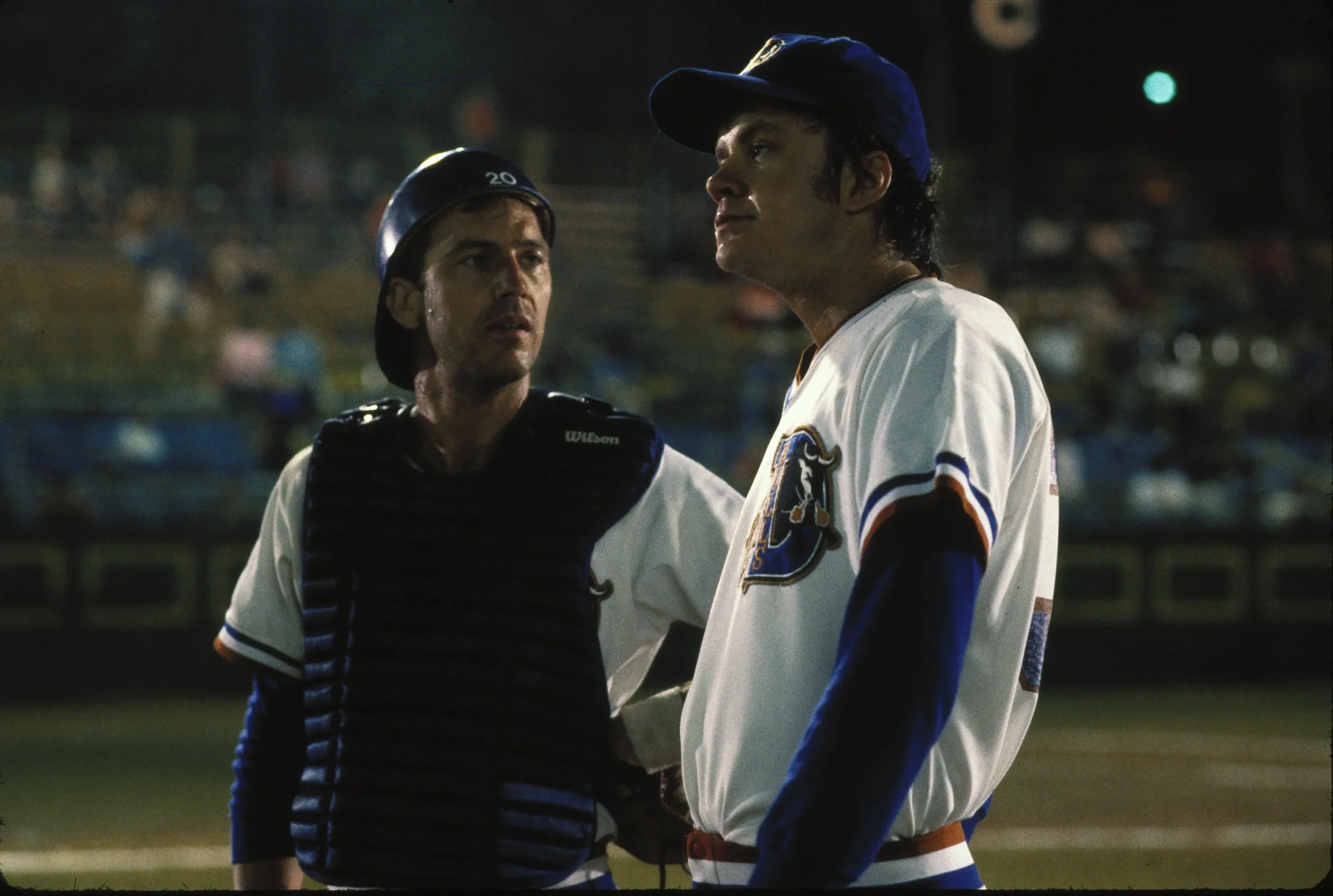
Like the rookie pitcher in the movie “Bull Durham,” corporate communicators need to learn their clichés, but for an entirely different reason.
In the 1988 movie, Nuke LaLoosh, played by Tim Robbins, is a raw, hard-throwing minor leaguer being prepped for the major leagues. His mentor is catcher Crash Davis, who’s been up to the majors and is near the end of his career, played by Kevin Costner.
On a bus ride after a game, LaLoosh asks Davis to teach him something. They have this exchange:
Davis: You’re gonna have to learn your clichés. You’re gonna have to study them, you’re gonna have to know them. They’re your friends. Write this down: “We gotta play ’em one day at a time.”
LaLoosh: Got to play… it’s pretty boring.
Davis: ’Course it’s boring, that’s the point. Write it down.
Writers also must learn their clichés — to avoid them. Many publications have lists of words to avoid. Communications teams should too.
“It’s a great way to get people on the same page (as it were), especially when novelty language loses its luster,” Carl Rosen, senior editor-copy chief of New York magazine, wrote last month in Queries, his subscriber-only newsletter on writing and editing.
Even personal list of words you want to avoid is a good idea.
The Wall Street Journal has a list of “more than 150 worn-out and/or cringey words and phrases that journalists love,” William Power, the newspaper’s stylebook editor, wrote in March in “Style and Substance,” his monthly blog.
That’s a lot. You can’t put in every cliché and jargon phrase on the list. It would run too long. You also don’t want to include things that are just plain wrong, such as writing “effect” when you mean “affect.” List common mistakes in your writing style guide.
We think the classic candidate for the list is what Rosen calls “overused trendy terms,” such as North Star. (For your convenience, dear reader, I’ve italicized words that should be benched.)
“For a while, we were all okay with calling an important principle or desideratum a ‘North Star,’” Rosen writes. “Then it went south: The distinctiveness of the expression was leached out from overuse.”
At news outlets, these words and phrases are sometimes called “banned words,” but that shouldn’t be the case.
When Rosen joined New York magazine in 2000, he was presented with the publication’s list.
“One of my new colleagues at the time claimed that expressions on the list were not strictly verboten, just considered gauche.”
Here are 21 words to avoid:
1. Affordable: It’s imprecise, according to The New York Times’ “Manual of Style and Usage,” Fifth Edition, which was published in 2015.
Still, affordable and its even more obscure companion, affordability, are the shining stars of our current political discourse.
2. Around: While it more often means to avoid or get past, the word is being used to mean the opposite, as a substitute for “to” or “about.” It’s prepositional abuse.
3. Audacious: It “might be” the “overused adjective of the moment,” Power of the Journal said on Oct. 20. Apparently, there’s a lot of competition.
4. Boomlet: “It is one of those words that journalists seem to use more often than regular people,” Power wrote on March 6. See Donned.
5. Content: This is a favorite of corporate communicators and social media mavens. We’ve even used the term on occasion.
But here’s what the Columbia Journalism Review says: “Content: ???????? What is the thing? Say the thing.”
6. Crisis: Hormuz. Water. Housing affordability. Even kratom. Journal columnist Jason Zweig has asked: What isn’t a crisis?
7. Decisioning: “Classic buzzword generator,” my colleague, Senior Partner Jim Ylisela, wrote earlier this year. “Take a perfectly good word, make it a gerund and then use it as a noun or a verb. We’re not deciding stuff; we’re decisioning, which sounds like we’d prefer not to decide anything at all.”
8. Donned, garnered and sported: Examples of journalese, words that reporters too frequently use.
“No one talks this way IRL,” Rosen writes, using an internet abbreviation that’s appropriate to the newsletter but should be used sparingly.
Editors decry these words (which itself is journalese), yet they creep into news copy and other forms of writing.
9. Excited: Press releases bring out surges of ecstasy in executives that are difficult to imagine. Corporate leaders are excited or thrilled unless they are delighted.
“Everyone’s left guessing: What’s all the excitement about?” we asked.
10. Iconic: At Crain’s Chicago Business in the late ‘90s, this particular word appeared in several weekly issues in a row. That was enough for the editors, who promptly banished iconic from the newsroom. Nearly 30 years later, it’s still overused, and not just at Crains.
11. Input: When used to mean offering an opinion, “has a flavor of jargon,” the Times says. Output tastes even worse.
12. Leading: “TAT Technologies Ltd.…, a leading supplier of products and services for the commercial and military aviation industries and the ground defense industries, today announced…”
That was on Oct. 27. It may be a fine company, but it had just $178 million in revenue in 2025 in a giant manufacturing sector. Who are we trying to kid?
There are enough companies with delusions of grandeur to fill up a corporate psychiatry journal.
That same day: Ribbon Communications said it is “a global leader in real-time communications technology, IP routing, and optical networking.” Bracco Group said it is “a global leader in diagnostic imaging.” Breakthrough T1D said it is “the leading global type 1 diabetes (T1D) research and advocacy organization.” And there were more.
13. Massive, big and huge: “Let the facts be the drama,” Power wrote on Aug. 11.
14. -maxxing: Short for maximizing, as in sleepmaxxing, statusmaxxing and proteinmaxxing. It’s barely two weeks since dictionary.com named it the 2026 word of the year and we’ve already had it up to here.
15. Nondescript:“ Giving up on a description while making that description, the CJR says. “Either describe the thing, or don’t.”
16. Reference: For future reference, it’s a noun, not a verb.
17. Socialize: When a plan or strategy is distributed among colleagues along with appetizers and beverages, then we don’t mind the use of this word so much. Otherwise, no.
18. Space: The final frontier? Not anymore, Captain Kirk. Now every company seems to say it’s in this space or that space.
19. Surface: In a story published Nov. 2, Dylan Freedman, the AI projects editor of The New York Times, recalled a conversation he had with Peter Baker, the chief White House correspondent, after a news meeting.
“I approached him afterward and told him I thought AI might be able to help us surface anecdotes,” Freedman said.
Was the news meeting on a submarine?
20. Trendy: At some point in my career as a commercial real estate reporter, my spouse and I were window shopping along the Magnificent Mile in Chicago. She turned and asked, “What’s that word you like to use?”
After a long pause, I said, “Trendy?”
That was the end of that word for me.
21. Unprecedented: “This is almost never true,” the CJR says. If it is true, explain how it is. If it is true, “historic precedent,” is redundant.
22. Virtual meeting: When Zoom was a new thing during the pandemic, this description made some sense. No longer. A video conference is an actual meeting, not one in essence. (I know I said 21. No charge for this one.)
Getting off the list
When Rosen joined New York in 2000, he was handed a single-page document entitled, “Words We Don’t Say.”
“Some of the terms on it are no longer banned or even noticed much, such as lifestyle,” Rosen writes.
Maybe trendy will make a comeback. I hope not.
What’s on your list of words to avoid? Email Tom Corfman, a senior consultant with Ragan Consulting Group. Want to learn about our Build Better Writers program of workshops and one-on-one editing and coaching? Email Tom to set up a free call with him and RCG co-founder and senior partner Jim Ylisela.
Follow RCG on LinkedIn and subscribe to our weekly newsletter here.