6 Writing Tips From an Award-Winning Author of ‘Flash Fiction’
Corporate communications teams can learn from the award-winning short story author’s thoughts on how to write well
If you’ve ever had to write something and found you keep thinking of something else, you’re not alone.
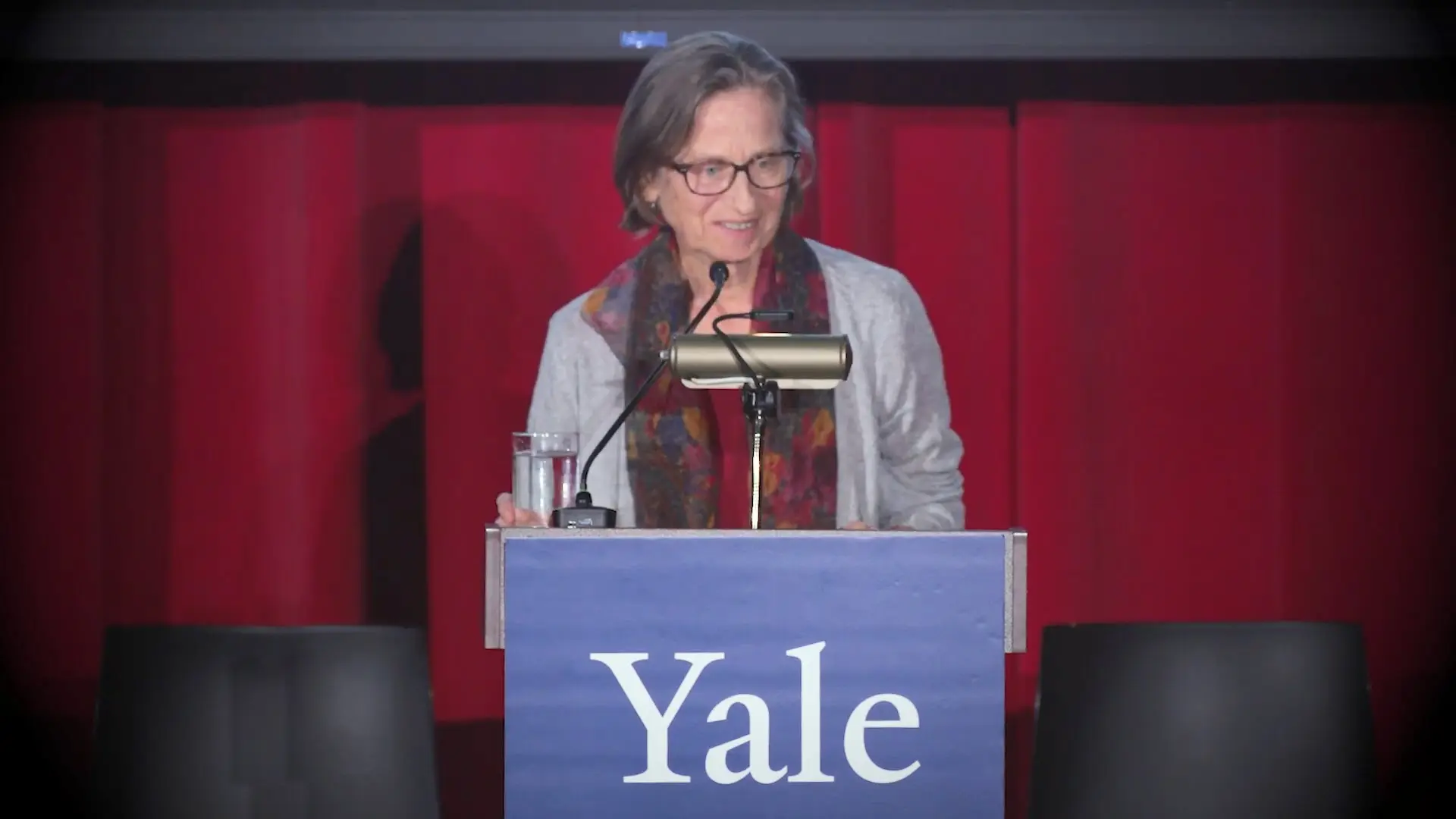
In 2023, Yale University asked award-winning author Lydia Davis to speak on the topic, “Why I write.”
“I wanted to be willing to set out to talk about my writing, but I found that I was thinking about reading — reading the writing of someone else,” she wrote in “Into the Weeds,” published last year and based on the 2024 Windham-Campbell Lecture.
“Into the Weeds” is about reading, not writing. Davis, the 2020 winner of the PEN/Malamud Award for short stories, demonstrates her expertise as a reader, constantly asking why certain words, sentences and entire books work. And why others do not.
Reading is a key way to become a better writer. When we recommend it we’re in good company. If you’re looking for a book on writing, check out, “Thirty Recommendations for Good Writing Habits,” which was included in Davis’ collection of essays published in 2020.
Davis has written novels, essays and poetry, but is best known for her short stories. Some just a page long. Others are less than that, such as this one:
MATURE WOMAN TOWARD THE END OF A DISCUSSION
OF RAINCOATS OVER LUNCH WITH ANOTHER MATURE WOMAN
She says, in a reasonable tone, “It doesn’t have to be a Burberry!”
She’s also an expert translator of French classics, which gives her a feel for the nuance and subtlety of language.
We’ve drawn on both books to find six writing lessons useful for public relations and internal communications teams, combined with some thoughts of our own.
1. Practice, practice, practice. Becoming a good writer requires repetition. “Always be writing,” we’ve suggested. Repetition helps develop good habits, as the title to Davis’ essay suggests.
Thus, her first recommendation: “Take notes regularly. This will sharpen both your powers of observation and your expressive ability.”
Making notes also eases the pressure to write when you’re on deadline.
2. Be curious. As communicators, we sometimes fall into the trap of thinking our job doesn’t start until a leader, manager or subject matter expert has information they want to share. Then, we “communicate.”
The great comms professionals get out of their cubicles and offices and look for stories. They talk to people, ask questions, develop relationships. We teach brand journalism because the techniques reporters use will uncover stories about your own company.
For corporate communicators, this often requires a change in attitude.
“Be curious—be curious about as much as possible,” Davis writes. “If you are curious, you will learn things, and the more curious you are, the more you will learn. And curiosity may lead you deeper and deeper into all sorts of subjects.”
3. Check the dictionary. When you’re stumped to find the right word, Pulitzer Prize-winner and teacher John McPhee has recommended going to a dictionary. He would probably shudder at the idea of right-clicking on a word to find a synonym.
Davis cites a chart of the Beaufort Scale of wind force contained in her 1970 edition of Merriam-Webster’s Collegiate Dictionary, which Davis, now 78, has had for a long time. Here are three examples:
Beaufort
Number
0
4
8
Name
Calm
Moderate breeze
Fresh gale
Wind Speed
MPH
<1
13-18
39-46
Description
Calm; Smoke rises vertically
Wind raises dust and loose paper;
small branches move
Twigs break off trees; moving cars veer
“The images are vivid because of their specificity and the good clear writing,” she writes. “I’m sure I learned something about writing clear and exact prose from the very precise definitions in this same dictionary, which I acquired at age twenty-five and consulted constantly.”
4. Find good quotes. It’s hard to get good quotes from executives and experts. There are more barriers than an obstacle course at basic training for the U.S. Marine Corps. Part of the trick is to listen intently for them like you’re sitting in quiet park. But instead, you’re standing amid the racket of a busy street corner.
Good quotes are elusive. Davis, a fiction writer, doesn’t discuss quotes, but she does discuss dialogue. In “Good Habits,” she offers requirements for good dialogue that could serve just as well as criteria for a good quote;
1. It sounds natural.
2. But it is more vivid and more interesting.
3. It reveals character or is in character.
4. It reveals the relationship or is true to the relationship.
5. It reveals or enhances the characters’ situation.
6. It enhances or advances the story.
A good quote doesn’t need to meet all these requirements, but it’s got to hit most of them.
5. Trim thoughtfully. I remember an editor’s advice on some stories, “Keep it light, tight and bright.”
Yet corporate communications are frequently none of those. Managers and experts push to cram in every little detail. Minutiae overwhelm audiences, who stop paying attention.
On the other hand, a well-known newsletter tool’s obsession with brevity and bullets frequently produces copy that is utilitarian but not engaging. The text is better than it might be but not as good as it could be.
We prefer a more balanced approach, teaching techniques to trim stories that make them better and shorter.
“The yardstick for a story is quality,” Jim Ylisela, senior partner of Ragan Consulting Group, wrote in 2019. “There is no rule, no magic number, for how long a story should be.”
Davis also makes this point.
“Cutting can be effective: it quickens the pace and involves more happening in a shorter space,” she writes. “But this does not mean that everything has to be short. You can write three thousand pages (as Proust did in ‘In Search of Lost Time’) and still be economical. In this case, economical simply means not saying more than you need to.”
6. Find the passion. Davis made me think about the challenges faced by internal communications specialists, who blame their boring copy on their boring topics.
In our writing workshops, we often say, “You can’t be bored. If you’re bored, the audience will be bored.”
Davis expresses appreciation for “The Wheelwright’s Shop,” a study of the lost art of wagon building published in 1923, or Richard Henry Dana Jr.’s “Two Years Before the Mast,” an account of a two-year voyage on a merchant ship published in 1840.
What saves these books from tedium?
“There is the passionate commitment to the peculiar subject combined with the close observation, the intelligence of the writing mind, and the high quality of the writing. But perhaps that list leaves out the heart — warmth, compassion, affection,” she writes.
She didn’t say it was easy.
Tom Corfman is a senior consultant with Ragan Consulting Group. Our Build Better Writers program aims to instill good writing habits in beginning writers while helping experienced ones refine their best habits.
Do you want to learn more about how the program could help you? Email Tom to set up a free call with him and RCG co-founder and senior partner Jim Ylisela.
Follow RCG on LinkedIn and subscribe to our weekly newsletter here.