Tips to Write a Q&A, Starting with Alex Haley
We have 10 suggestions to report and write stories in a format that has become a mainstay of internal corporate communications
Q&A’s weren’t a routine part of journalism in 1962 when Playboy magazine tapped an up-and-coming freelancer to interview renowned jazz trumpeter Miles Davis.
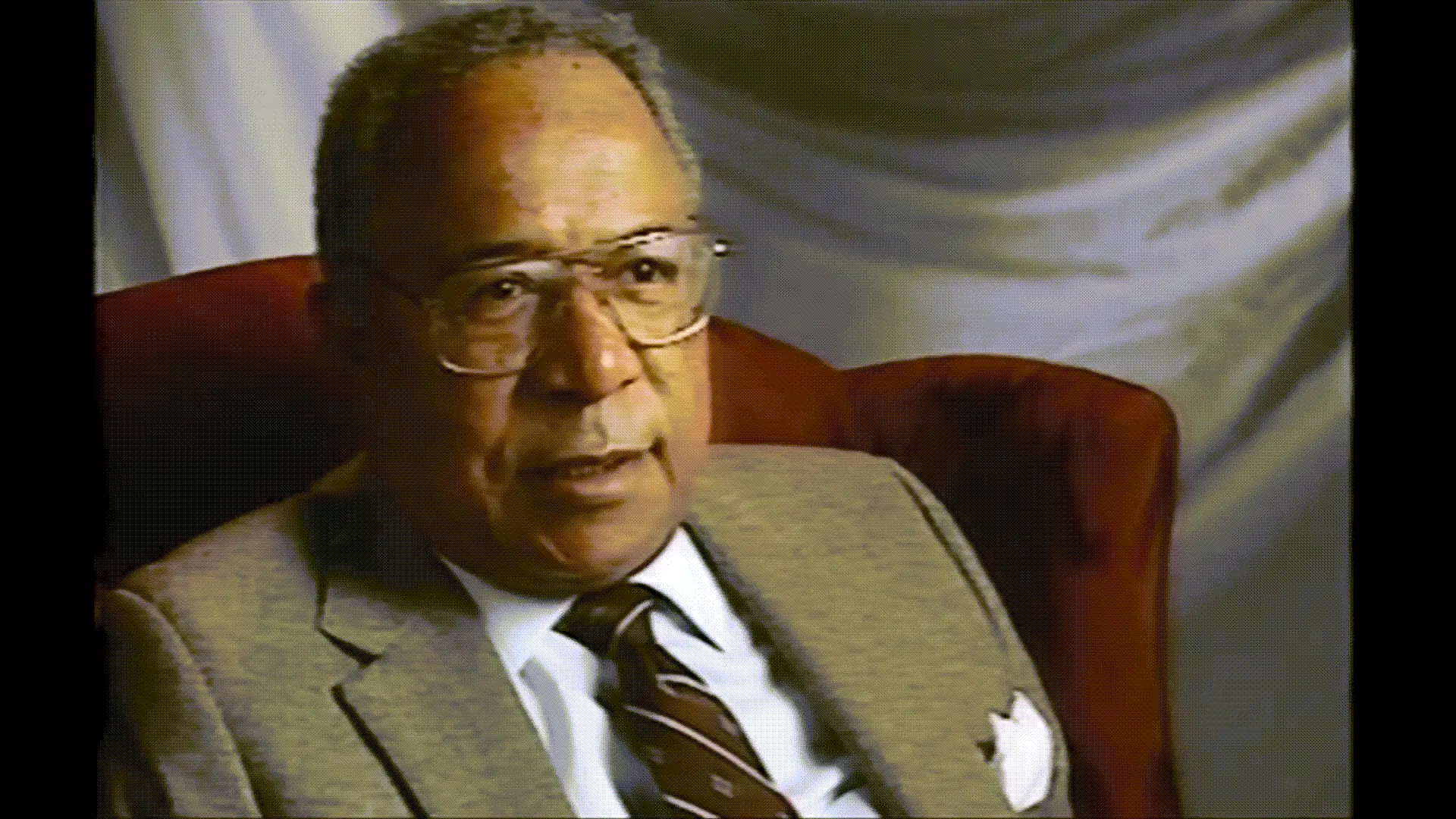
It was Alex Haley, who years later described himself as “a struggling writer, desperate to break into Playboy.”
At the time, the magazine’s sales were growing, but it was better known for its centerfolds than its journalism. Starting with Davis, a string of Playboy interviews immediately boosted Haley’s career, more than a decade before publication of his blockbuster, Pulitzer Prize-winning novel “Roots” in 1976. They also helped change the magazine’s reputation.
Journalists’ acceptance of the Question and Answer structure grew more slowly. Yet it has become a mainstay of both news outlets and corporate communications teams.
Despite its popularity, scant attention has been given by writing teachers and coaches on how to write an engaging Q&A.
We have 10 tips on how to report and write Q&A’s. But first, a little background. “The Playboy Interview” came about as a deliberate editorial choice, although Haley’s involvement was a bit by chance.
Playboy Interview
Nearly a decade after Playboy’s launch in 1953, publisher Hugh Hefner wanted to improve the magazine’s reputation for journalism, according to Murray Fisher, who was given the assignment. Hefner directed the editors to develop a monthly interview feature.
“There was no Q&A of any consequence in American journalism at the time, certainly not in a mass market magazine,” Fisher wrote in an introduction to a collection of Haley’s interviews published in 1993. Among the few examples were the literary publication The Paris Review and The Realist, a satirical social commentary magazine that closed in 2001.
Fisher was told to look for material that could get the feature started in the files of a Hefner entertainment publication that had recently closed. He found a draft of a profile of Davis by Haley and tape recordings of Haley’s interview.
A veteran of World War II, Haley had retired in 1959 from the U.S. Coast Guard, where he had been a press officer. After his service, he was slowly building a career as a freelance journalist.
Davis, a pioneer of “cool jazz,” was well known, but he seldom granted interviews to mainstream media. The interview “was memorable less for his insights into jazz than for his scalding observations about white racism in American,” Fisher wrote.
Fisher sent Haley to interview Davis again. The writer returned to the newsroom “several weeks later with many hours of tape ― more than could be transcribed and published under prevailing standards,” G. Barry Colson, another Playboy editor, wrote in the introduction to a 1981 collection of interviews.
That’s a good introduction to our tips on writing a Q&A.
1. What kind of Q&A is it? Is it an interview or an “explainer” story? An explainer is intended to help the audience understand something that’s complicated. For example, FAQs are not interviews transcribed.
We’ve written about explainers here.
The Q&A format can work with an explainer story, but long verbatim quotes never work well to break down complex concepts. People seldom talk that clearly.
2. The Q&A is a profile. The interview Q&A should be used when we might write a profile: a new hire, a promotion or a retirement. We love profiles and think communicators should do more of them. Think of your Q&A as a profile of the subject.
Generally, profiles should have five elements:
a. Opening anecdote, which demonstrates a key theme about the person.
b. Nut graph, expressing the essence of personality of subject.
c. Themes, one or two insights into or characteristics of the person
d. Biography. How did the subject get here?
e. Look ahead. What’s the future hold?
Like a “regular profile,” a Q&A profile doesn’t have to have all five parts, but it should have most of them.
3. Do the research. A good interview typically requires the “Two P’s,” planning and preparation.
In an interview about the interviews in Playboy’s 25th anniversary issue in 1978, Haley asked, “Tricks of the trade?”
He answered his own question this way: “One device that worked for me was to bone up on my subjects far back into their childhood. I discovered that casually mentioning something they themselves had forgotten would surprise them and would immediately start them reminiscing.”
4. Prepare questions. Think about how in the interview you’ll touch on the five elements. You want to get people talking about how they feel or the opinions they have.
The hard part of a Q&A is filling in those elements by using mostly the subject’s own words. You may have to ask the same question more than once in different ways.
5. Hang around. Time is a luxury no one has, but a second interview can make the difference between a good Q&A and a great one.
“Alex more or less lives with someone until the subject feels completely comfortable and starts acting natural and opening up,” said Fisher, who also edited Haley’s manuscripts for the groundbreaking “The Autobiography of Malcolm X,” published in 1965, and “Roots.”
Fisher was quoted in the 1976 book, “The Craft of Interviewing.”
6. But be conversational. Haley’s remark about “casually mentioning something” is about setting the tone. An interview is not an interrogation. But then again, it’s not a conversation either. You have a checklist of information you have to obtain.
7. Listen and read. Transcripts are handy, but listening to the recording is key. Not only should you check for accuracy, but you can better capture emotions.
8. Check the order. You may find that the order in which you asked the questions may not be the best way to tell the story. If it isn’t, it’s fair to change the order. A Q&A is not a transcript of the interview. It’s a story.
“I reorder the questions to try to give the interview some sort of narrative or structure, grouping similar questions together,” Elina Shatkin, a Los Angeles-based journalist and radio producer told Contently, a website for freelancers.
9. Clarity and brevity. A Q&A interview typically carries the note that the copy has been edited for clarity and brevity. Your task is to clean up and trim. Here are three tips:
a. Correct the grammar and eliminate the “ums” in answers.
b. Don’t run long-winded answers. Select the most quotable sentences, being careful to keep the answers in context.
c. Make the questions as tight as possible. Include just enough information so that the answers make sense. Add context if it’s missing from the answer.
10. The intro. The introduction is last in our list, but the most important part. Like any other story, the headline and first sentence are the key steps in engaging the readers.
Explain why the audience should care about this person. Here’s where you can address one of the five elements not suited for the Q&A format, such as the nut graph or an anecdote that wasn’t told cleanly in the interview. Tell the reader what’s ahead.
Keep the intro short and end by setting the stage for the first question.
‘Clinical skill’
“Roots” was turned into a TV miniseries in 1977, the year after it was published. It inspired many African Americans, educated Whites about slavery and sparked the interest in genealogy among all races that continues today.
Haley’s Playboy interviews had a more gradual effect. They helped establish a reputation for journalism for a magazine known for its nude photos. The New York Times playfully called the interviews “the No. 2 Feature in Playboy.”
The Playboy interviews also pointed in a direction taken by many journalists and corporate communicators.
Haley, who died in 1992, denied the existence of any special interviewing expertise.
“There is no clinical skill, really,” he said. “I just use all the things I can think of from my experiences.”
As a teenager, Tom Corfman told his parents he read Playboy for the interviews. He’s a senior consultant with Ragan Consulting Group, where he directs the Build Better Writers program. Does your communications team need to elevate their writing? Email Tom to set up a free call with him and RCG co-founder and senior partner Jim Ylisela.
Follow RCG on LinkedIn and subscribe to our weekly newsletter here.