Want a Better Podcast? Find Nerdy Guests and Translate.
We have 8 tips to plan and produce brand podcasts that will draw audiences
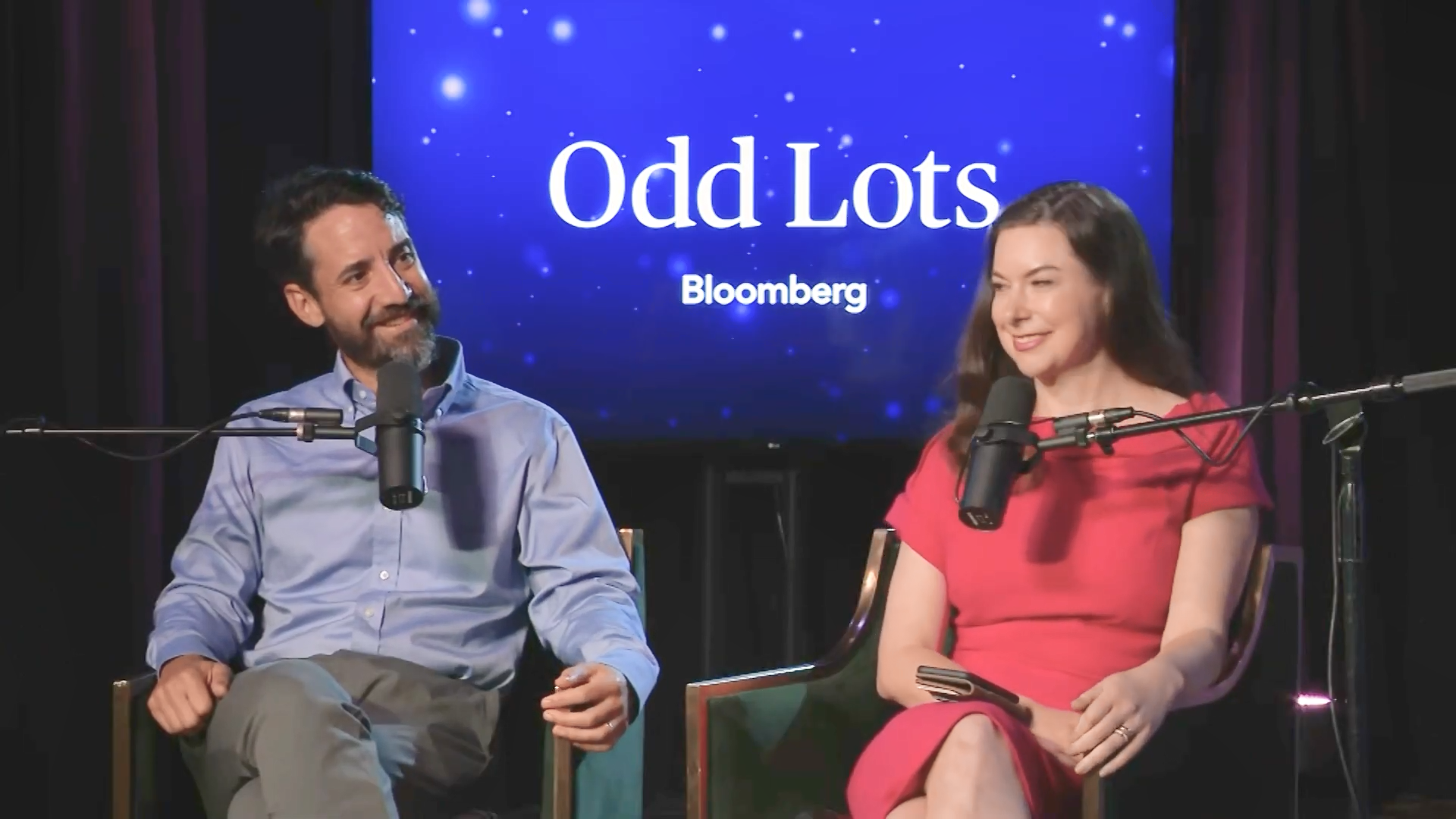
The Bloomberg podcast “Odd Lots” gets a lot of high-profile guests, but its success is due to the cohosts’ ability to explain complex topics ― like tariffs, crypto currency and snarled supply chains ― without dumbing things down.
“We tell our guests, ‘You go in deep as possible. Go nerdy, jargon, in the weeds.’ It’s our job to translate, to get them to pause, to get them to clarify,” cohost Joe Weisenthal said in 2021.
That’s a valuable tip for organizations planning or running their own podcast. Even with that, it’s hard for any podcast to emerge from the crowd.
“It goes flat when companies think that the audience will just find them and they’ll come in their masses,” said Des Paul, executive producer at production company The Content Works.
“It couldn’t be further from the truth,” he recently told Financial Times. “It takes time and commitment to build a podcast audience as well as great content.”
Brands are increasingly creating their own podcasts. The best ones employ the journalistic tools of reporting and storytelling ― what we call brand journalism. We have eight tips (with subparts) to create a great podcast.
Planning
1. Who’s your audience? Write a vision statement that defines what your audience wants to know, like news outlets have. This is a key to brand journalism, a topic we frequently cover.
Think beyond your organization’s products or services. Think broadly about what your customers want to know about your organization’s industry or economic sector.
The competition for listeners is intense. Many corporate podcasts fail because they are saturated in public relations and marketing messages. Brand journalism podcasts will build a company’s reputation, setting a context for sales and marketing when people are looking to buy.
2. Listen to podcasts. Just as reading can make writing better, listening can teach you to produce a better podcast. Which ones do you like? Why?
Familiarity with other podcasts will help you decide the next question.
3. What’s the format? Brand podcasts are variations or combinations on three basic formats.
3.a The news radio format is like broadcast outlets such as 1010 WINS in New York, Newsradio 78 in Chicago or KNX News 97.1 in Los Angeles. This format delivers a summary of the top news of the day.
For example, the podcast CNN 5 Things gives the audience top headlines in 7 minutes or less.
3.b One-on-one interview is by far the most popular format, but the most difficult to do well. The typical minimum length is 30 minutes, although many are much longer. It’s hard to keep the audience’s interest to the end.
Interview podcasts require a lot of preparation and lively guests, which are hard to find. But most important is the strength of the interviewer, whose personality must carry the broadcast.
The appeal of the podcast “Inside Trader Joe’s” is the co-hosts and their interplay.
3.c The single-story format is a chance to go in-depth on a topic, such as John Deere’s On Life & Land, which last month produced an episode on Christmas tree farming with nary a reference to the manufacturer’s agricultural equipment.
This format relies on reporting, either original work for the podcast or a “newsjack,” drawn from another source. It can include several interviews or just one, such as talking to a reporter who acts as a guide to the story. That’s the approach The Wall Street Journal often takes with its podcast, where the team creates strong stories on deadline.
This format focuses on one story, making it different from the interview format, which focuses on the person interviewed.
3.d Consider video. Podcast producers are increasingly turning to video, according to Deloitte’s “2026 Technology, Media & Telecommunications Predictions,” published in November.
“Podcasts aren’t just for listening anymore,” the Big Four accounting firm says.
The budget will determine how elaborate the video presentation will be. But even a “talking head” shot of one person can boost the audience’s engagement.
“Viewers see hosts’ facial expressions, body language, and the visual context of the environment, which creates a sense of closeness,” the report says.
Production
4. Write simple scripts. Sentences that are clear and concise when read aren’t always clear enough when spoken. Writing scripts is a different challenge for even experienced communicators.
Avoid jargon, even if the audience is familiar with technical terms. Break up long sentences to build in more pauses. Make the logic of the script plain.
Phonetically spell out difficult words and proper names.
5. Create a podcast style guide. A podcast should be more conversational than other corporate communications. Your existing guide likely won’t work well.
Long job titles need to be shortened. The AP Stylebook’s warning is especially true, “Avoid alphabet soup.”
You’ll be making these changes on the fly. Keep track so that your podcast style is consistent and you don’t have to reconsider every question.
6. Read out loud. Put yourself in the shoes (or ears) of the audience and ask, “How does it sound?”
Poets and poetry readers practice scansion, analyzing the rhythm of stressed and unstressed syllables and the placement of pauses, both long and short. Mark up the script to remind you where to pause and which words to emphasize.
Professional broadcasters do the same thing. Although it comes naturally to them, you’ll sometimes see them in a corner of the studio, muttering to themselves.
7. Amp it up. Recording tends to make people sound flat, without energy. To counteract this, Chicago sports broadcaster Mike Leiderman, now retired, used to say broadcasting requires “life plus 10 percent.”
Give your podcast a boost like it needs an energy drink. Keep a conversational but animated tone. You don’t want to be over the top, but most people don’t have that problem.
If you’re looking for a little extra oomph, stand up. Just don’t wander away from the microphone.
8. Enlist a listener. It’s hard for us to hear how we sound. On-air broadcasters rely on producers to do that. While recording, ask someone to listen. It will generally improve the quality of the recording and avoid last-minute edits.
The perfect guest
“Odd Lots” has examined topics ranging from high finance and the economy to the lumber market and the chicken industry (a three-part series). Guests have included Lina Khan, former chair of the U.S. Federal Trade Commission; Jim Cramer of CNBC; New York Mayor Zohran Mamdani during the campaign; and billionaire investor Ray Dalio.
But Tracy Alloway, Weisenthal’s cohost, says the best guests are people who can explain a complex topic in plain language and with passion, according to The New York Times.
“It turns out,” Ms. Alloway said, “that the person obsessively tweeting about their niche interest is often the perfect ‘Odd Lots’ guest.”
Tom Corfman is a senior consultant with Ragan Consulting Group who’s always intrigued by people who can simplify complicated concepts. Want to learn more about our Build Better Writers program of workshops and one-on-one coaching and editing? Email Tom to set up a free call with Tom and RCG partner Jim Ylisela.
Follow RCG on LinkedIn and subscribe to our weekly newsletter here.