Internal Comms on ICE?
When it comes to talking about immigration raids, many companies are playing it safe. But employees are pushing for more.
In May, it will be six years since George Floyd died under the knee of a Minneapolis police officer, setting off a flurry of activism around diversity, equity and inclusion. CEOs issued public statements condemning the killing, held town halls and group meetings with their employees, and rolled out new DEI programs.
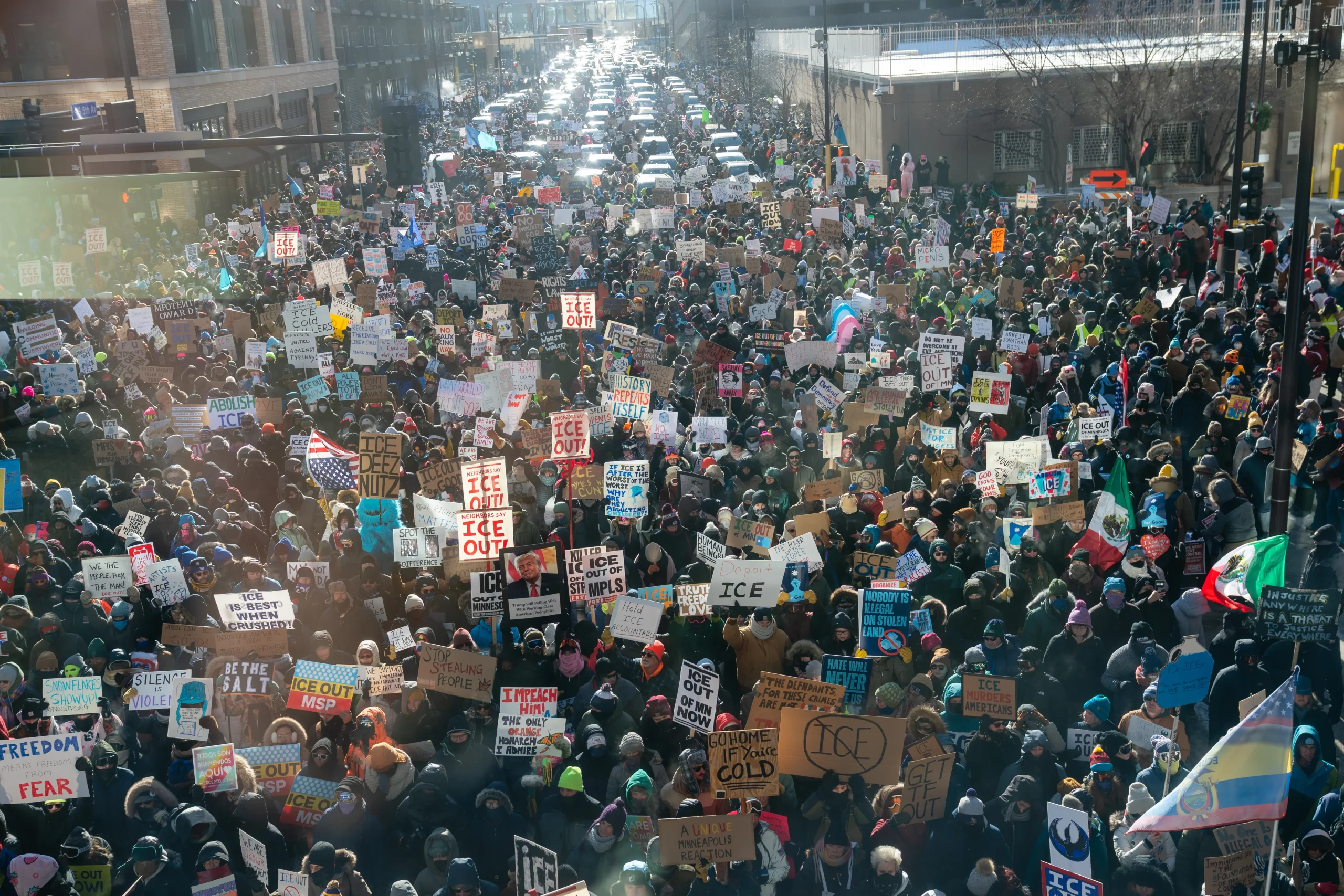
Fast forward. After two U.S. citizens were killed by federal agents last month in the same city while protesting the federal government’s immigration enforcement policy, many companies were silent, while others released somewhat generic statements urging calm and restraint.
This is not an easy call for companies and the communicators who advise them.
“Speak out, [and] you are quite likely to get retaliation from the government,” Alison Taylor, a professor at the NYU Stern School of Business, told Charter, a newsletter on workplace practices. “If you don’t, you are going to really lose trust with your customers and employees.”
Many organizations are still reeling from the conservative backlash that forced them to scale back, rename or eliminate their Diversity Equity and Inclusion initiatives. When President Donald Trump returned to the White House in January 2025, he issued a series of executive orders to eradicate federal DEI programs and publicly threatened companies, universities and other institutions that failed to eliminate theirs.
Similarly, Trump’s push on arrests and deportations, led by U.S. Immigration and Customs Enforcement, has had a chilling effect on the private sector, despite polls suggesting that Americans aren’t happy with the government’s aggressive approach. A Feb. 6 Marist poll found that 65 percent of Americans think ICE enforcement has gone too far, while 22 percent said the actions are just right and 12 percent said the agency hasn’t gone far enough.
After the killings of Renée Nicole Good and Alex Pretti by federal agents, CEOs from more than 60 Minneapolis companies, including Target, Cargill and 3M, issued a joint letter on Jan. 25 calling for an “immediate de-escalation of tensions.” But the letter failed to mention the victims by name, ICE, U.S. Customs and Border Protection or Trump.
Target, based in Minneapolis, sent a few emails to corporate team members, including a Jan. 8 note from Chief Human Resources Officer Melissa Kremer that referenced “events in our hometown,” according to Modern Retail, an industry publication.
Employees pushed back. In a Jan. 23 letter to management, 284 Target employees called on the company to ban ICE from its stores.
“Target’s continued inaction in the face of the current administration puts all of us at risk of more harm in our workplaces and represents a moral failure to protect those in our community,” said the letter, which included outgoing CEO Brian Cornell and Michael Fiddelke, whose first day as CEO was Feb. 1.
Fiddelke sent a video to employees that same day, though he didn’t mention Good, Pretti or Trump by name. “The violence and loss of life in our community is incredibly painful,” he said. “I know it’s weighing heavily on many of you across the country, as it is with me,” he said.
On Feb. 10, CNBC reported that more than 1,400 Salesforce employees signed a letter calling on CEO Marc Benioff to cancel the company’s pitch for its AI services to speed up hiring of new ICE agents. (It didn’t help that Benioff joked about ICE presence at a Las Vegas all-hands employee meeting on Feb. 10.)
Other companies took a firmer stand. In a Slack message to employees, Open AI CEO Sam Altman wrote, “I love the US and its values of democracy and freedom and will be supportive of the country however I can; OpenAI will too. But part of loving the country is the American duty to push back against overreach. What’s happening with ICE is going too far.”
So where does that leave company communicators?
In a Jan. 29 letter to members, The Public Relations Society of America announced it would remain “neutral” on the killings in Minneapolis. That drew a sharp rebuke from our longtime friend and colleague Shel Holtz, who wrote that the Society’s Code of Ethics “not only permits but also demands organizational advocacy.”
In an open letter to the PRSA leadership, Holtz wrote, “Silence on this issue threatens to erode the very credibility and ethical standing you seek to preserve.”
Politics has always been a touchy subject inside companies, but failing to acknowledge the events in Minneapolis, especially after so many organizations took action after George Floyd’s murder, carries its own consequences.
Edelman’s 2026 Trust Barometer, the firm’s 26th annual survey, put it this way:
“If left unaddressed, unmitigated differences will stall workplace productivity, undermine CEO leadership, and harden resistance to innovation.”
The good news, Edelman says, is that employers are in a good position to be “trust brokers,” with multiple opportunities to “work and interact with people who have different values.”
But only if leaders are willing. Here are some tips for internal communicators offered in the Charter story, along with our own advice:
1. Be the counselor you’re meant to be. Internal communicators earn their stripes by giving leaders their best advice, especially in a crisis. There’s a lot of room for effective employee communication between taking to the streets and staying silent.
Consider alternatives to public statements, Gab Ferree, who runs a community for communications leaders, told Charter. “You could call an all-hands, you can talk to people one-on-one, you can reach out to individual employees, you could make a donation, you could give a day off for volunteering or protesting,” she said.
2. Explain the why. No matter how the company decides to act on the immigration issue, including not acting at all, employees will want to know the why behind the decision. They may not agree with it, but they will appreciate getting the chance to hear about it from their leaders.
3. Weigh the relevance to your business. A company based in Minnesota, or one whose workers might be at risk from seemingly arbitrary ICE raids, should consider stronger actions like those pushed by Target employees.
When Trump criticized Delta Airlines for continuing its DEI programs, Chief External Affairs Officer Peter Carter had a good answer.
“We are steadfast in our commitments because we think they are actually critical to our business,” Carter said during the company’s fourth quarter earnings call in January 2025, as reported by Atlanta’s Fox 5 News. “Sustainability is about being more efficient in our operations, and really, DE&I is really about talent — and that’s been our focus.”
4. Lead group discussions but know that talk inside often finds its way outside. Those conversations can be informal and don’t have to be about policy. I spoke with a senior manager of internal communications at a large tech company who wanted to share her own feelings about the events in Minneapolis.
“I woke up in the morning, logged on and thought, ‘I can’t believe that I’m pretending that nothing is happening in this country right now,’” she told me.
The manager dropped a note to her team in Slack to say she was adding 30 minutes of extra time before their regular huddle for anyone who wanted to join, not to talk politics but to share how they were feeling.
“A lot of people expressed that they were feeling frustrated, fearful and hopeless. People told me later that it was helpful to talk,” she told me.
“Everybody has a lot going on in their lives, and you can’t always bring your best self to work. I wanted to say how I felt and then have a safe space for [others] to acknowledge how they’re feeling.”
Ragan Consulting Group Co-founder Jim Ylisela believes internal communicators have more influence with leaders than they think. Share your story by emailing Jim.
Follow RCG on LinkedIn and subscribe to our weekly newsletter here.