For Employees It’s a Big Chunk of Change
7 tips on crisis communications from a media-savvy lawyer
Five months after Kraft Heinz employees started work on splitting the slumping food giant into two companies, a new CEO last week put the plan on hold indefinitely, the latest example of the dizzying pace of change facing workers everywhere.
The average employee now wrestles with 10 change programs a year, five times the number of such initiatives a decade ago, according to the Q1 2006 edition of the McKinsey Quarterly released last month (Vol. 62, No. 1).
Few corporate initiatives are as grand as the plan to break up the maker of Heinz ketchup and Lunchables meal kits into two companies with combined sales of about $26 billion.
Yet the success rate of new initiatives is dismal and employees are skeptical.
While 88% of senior leaders say their new organizational structure will achieve its goals, only 36% of employees who work in the new structure agree, according to a survey of 1,000 executives and employees by Bain & Co., also released last month.
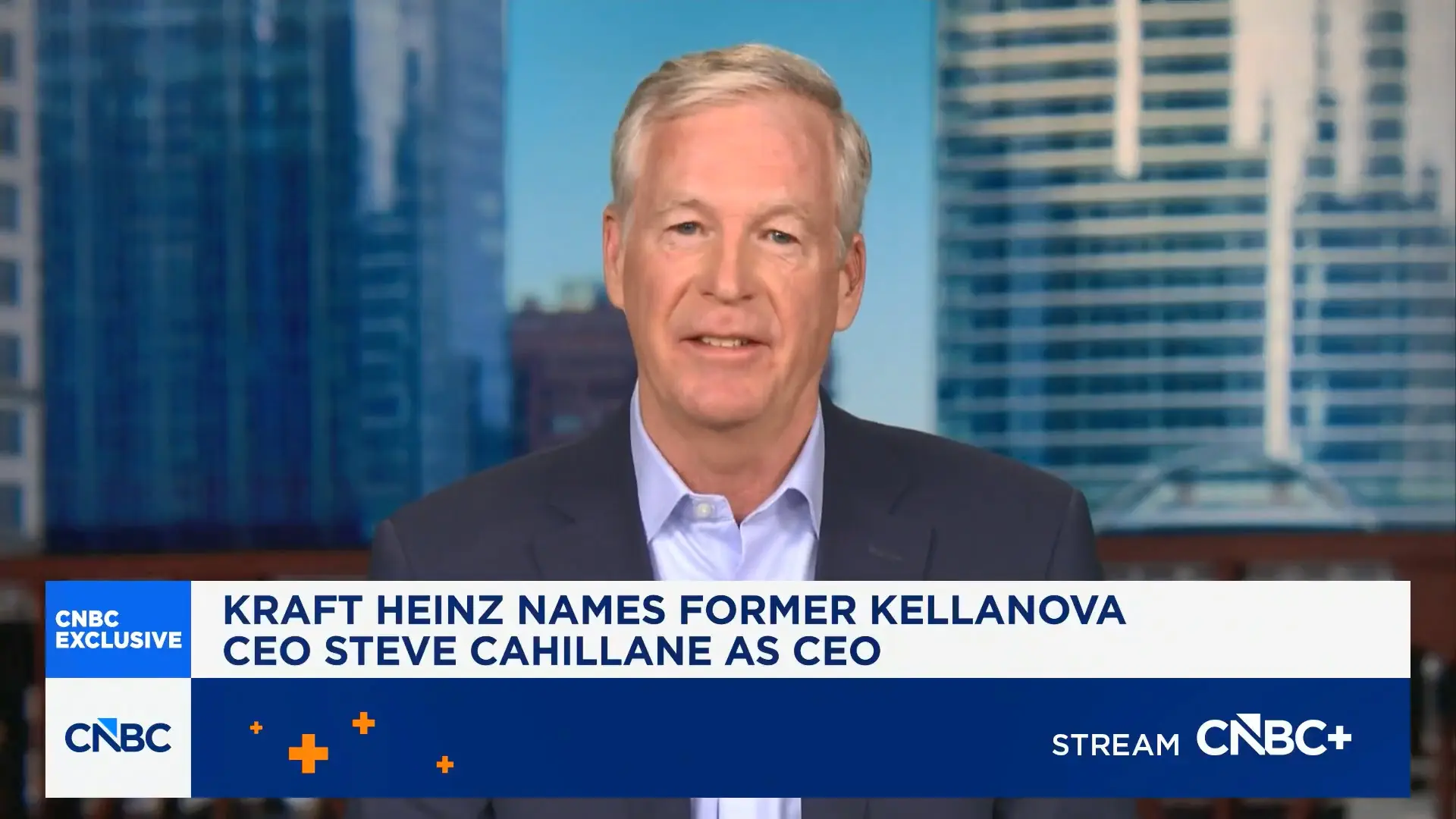
When Steve Cahillane was named Kraft Heinz’s CEO in mid-December, he praised the breakup plan, which employees have been working on since it was announced on Sept. 2, 2025, at a cost of $60 million. Now, he faces the challenge of returning the company to growth by changing its marketing, product development and pricing.
The Kraft Heinz news got us thinking about the role internal communications teams play in corporate strategy changes and new initiatives. We have five lessons.
1. One step at a time.
Too often leaders expect change to be achieved like the 2023 Academy Awards-winning best picture, “Everything Everywhere All at Once.”
A better approach is to start by aiming to change a specific behavior, decision or outcome, according to James Elfer, founder of a London-based consultancy that promotes a specific model of change management.
“Behavioral targeting is both the easiest and hardest part of our model,” he and two co-authors wrote in an article in the Harvard Business Review published last month. “Easy because there will be dozens, maybe even hundreds, of behaviors connected to a cultural aspiration such as innovation, inclusion, or high performance for you to choose from. Hard because you must ruthlessly prioritize the one(s) that will make the biggest impact.”
2. Wellness check.
Workplace well-being has steadily fallen since 2020, according to researchers at Johns Hopkins University. That’s bad news for corporate change initiatives.
Attempts at organization-wide changes will fail if they aren’t accompanied by an equal attention on improving the health and happiness of employees, consultants with New York-based McKinsey & Co. say.
“Too many leaders, when faced with low organizational health, stories of burnout, and persistent failure to deliver change initiatives, get the wrong signal,” they wrote. “Instead of asking why people can’t deliver, they turn to the ‘burning platform’ playbook and crank up the pressure, reiterating the negative consequences of failure to deliver.”
That reaction ironically makes it harder to achieve the desired transformation. The McKinsey team has an alternative approach.
“Leaders need to devote as much time to defining and managing health-related initiatives as they do performance-focused initiatives,” they urged.
That 1:1 ratio is an ambitious goal but underscores the growing importance of employee wellbeing.
3. What’s it mean?
In our communication audits, we often find that many employees are aware of a recently announced corporate initiative, and some can even repeat the catch phrases. But few can explain how the new strategy should change their jobs.
Leaders and managers “must actively ‘connect the dots’ between daily tactical moves and the broader strategic arc,” communications firm FleishmanHillard wrote in a report released last month. “Unless you actively translate the corporate vision into their specific context, stakeholders will fill the silence with their own, often cynical, interpretations. If you aren’t tired of repeating it, they haven’t heard it yet.”
When leaders do communicate, they talk too much about structural changes and milestones and not enough about doing the work.
“Workers are left struggling,” management consultants with Boston-based Bain write. “’How will we operate in the new environment?’ they wonder. And the middle managers tasked with helping them adapt are just as confused.”
The recent waves of layoffs of middle managers mean there are fewer people to explain to employees a change in direction or a new initiative. That’s all the more reason to increase the support given to the remaining managers with training, toolkits and tipsheets. Another option is a weekly newsletter just for managers.
4. What’re they doing?
Employees are naturally curious about what coworkers do in different departments or even different spots on an assembly line. It makes them feel like they are part of the bigger picture. Yet employers seldom provide that information.
Ending that isolation is a good practice in general, but effective managers know it is especially important during a major change.
“If a team is not directly impacted at a given moment, that team’s leader will share stories about changes occurring across other parts of the business,” according to Kayla Velnoskey, research director in the HR practice of Gartner, and two colleagues at the Stamford, Connecticut-based research and consulting firm.
“This shows employees that they are a part of a continually transforming organization without overloading them with non-actionable information,” they write in an article published last month in the Harvard Business Review.
5. Change the Q&A.
Employee feedback during a strategic shift is crucial, everyone agrees. Getting honest reactions is difficult. Leaders often fool themselves by thinking that silence means everything is OK.
Letting employees submit questions at a town hall is the start of a good idea, but just the start. Most firms ask employees to anonymously submit questions, but many workers don’t participate.
“The top reasons? Futility and fear,” according to an article cowritten by Benjamin Laker, a professor of leadership at the business school of the University of Reading in England. The article was published in the Harvard Business Review in August.
To overcome these obstacles, the authors cited one tech company that established an employee council to select and “read aloud the most critical, uncomfortable questions during executive town halls — on camera, with no pre-screening.”
Faster pace
The breakup plan would have undone a $46 billion merger of two well-known brand names that never achieved the anticipated success when the merger was completed in 2015. Cahillane didn’t rule out another separation plan in the future but wouldn’t put a timetable on when it would be reconsidered.
Piling one change onto another creates a deep feeling of fatigue. But Cahillane says he understands the importance of employee communication.
He was CEO of Kellogg when in 2023 it split into WK Kellogg and Kellanova.
“Town halls, blogs, meetings, constantly communicating,” he told the Brunswick Review in 2024. “Always showing up in places, physically being there. The communication was relentless.”
Tom Corfman is a senior consultant with Ragan Consulting Group. Do you need help planning the communications for a change in strategy or major initiative? Email Tom to set up a free call with Tom and RCG partner Jim Ylisela.
Follow RCG on LinkedIn and subscribe to our weekly newsletter here.