Tips from the Phil Jackson of Writing Teachers
Inspired by Russian writers from the 19th-century, George Saunders has lessons helpful to today’s corporate communicators
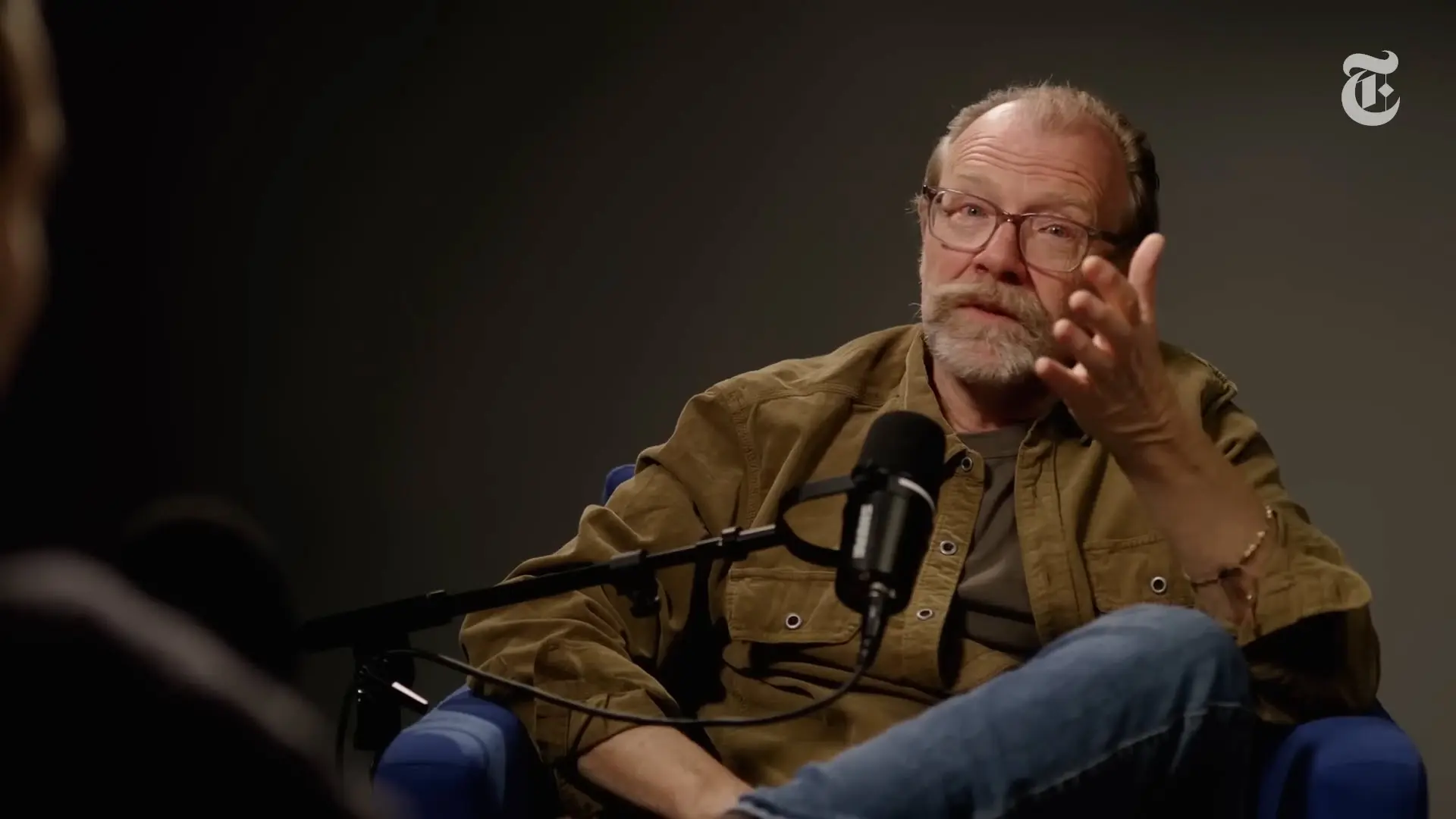
I love reading books by writers about writing, but I put off for years reading “A Swim in a Pond in the Rain,” because I thought George Saunders’ examples from 19th century Russian writers wouldn’t be helpful to modern-day corporate communicators.
I was wrong.
Saunders was recently called “the Phil Jackson of writing teachers” in The New Yorker, after the basketball coach who has won the most NBA championships (11).
And it turns out there are great lessons for public relations and internal comms teams from writers such as Leo Tolstoy and Anton Chekhov. At least that’s true when the stories are in the hands of Saunders, a prize-winning short-story author and long-time creative writing teacher at Syracuse University.
It’s also true if readers are willing to stop marveling at his close reading analysis of the stories long enough to find the insights that are helpful to any kind of writing. We highlighted three tips from the book, combined with our own thoughts.
Saunders has published more than a dozen books. In 2013, he won the PEN/Malamud Award after the publication of “Tenth of December,” a collection of short stories.
Four years later, his first novel, “Lincoln in the Bardo,” about Abraham Lincoln’s grief after the death of his 11-year-old son, won the Booker Prize. Tom Hanks this year agreed to play the president in the film version. His second novel, “Vigil,” topped The New York Times Best Sellers list this year, despite a negative review in the newspaper.
“A Swim in a Pond in the Rain” grew out of a course on Russian short stories that Saunders taught at Syracuse for 20 years. The book focuses on translations of seven short stories by Nikolai Gogol and Ivan Turvgenev, as well as Tolstoy and Chekhov. The book’s title is from a scene in a Chekhov story.
“For a young writer, reading the Russian stories of this period is akin to a young composer studying Bach,” he writes. “All of the bedrock principles of the form are on the display.”
Saunders illustrates his lessons by quoting lengthy passages from each of the stories he examines. We’re not repeating those passages, which help readers understand his precepts as well as enrich appreciation of the works. The book has many tips. Here are just three:
1. Sentence by sentence. Before Saunders was a prize-winning author, he submitted a story to the renowned literary editor Bill Buford of The New Yorker. In a phone call, the demanding Buford went over his changes.
“Enduring a series of painful edits, feeling a little insecure, I went fishing for a compliment,” Saunders recalled. He asked Buford with a whine what he liked about the story.
“There was a long pause at the other end,” Saunders writes. “And Bill said this: ‘Well, I read a line. And I like it…enough to read the next.’”
That comment became one of Saunders’ central insights: A story “proceeds, and charms us (or doesn’t), a line at a time. We have to keep being pulled into a story in order for it to do anything to us.”
Our take
That one-line-at-a-time approach begins with the headline, which must be engaging enough to prompt readers to click on it or move to the first sentence.
The purpose of the first sentence, still called the lede in some newsrooms, is to motivate readers to go to the second sentence. But the lede can’t have so much information that readers get bogged down in detail.
Give the reader a running head start into the story. The hed and lede are so important that writers should draft them first thing, knowing that they probably will change.
2. Make it move. Turning notes and data into a story, giving it what’s called “structure,” can be a challenge.
Structure is “simply: an organizational scheme that allows the story to answer a question it has caused its reader to ask,” Saunders writes.
He elaborates: “’We might imagine structure as a form of call-and-response. A question arises organically from the story and then the story, very considerately, answers it. If we want to make good structure, we just have to be aware of what question we are causing the reader to ask, then answer that question.”
Saunders’ approach is like his one-line-at-a-time tactic, but we’re looking at a wider picture. What are the big ideas, events and information readers need to know? How do they relate?
“See? Structure’s easy,” he jokes.
Our take
Saunders calls story structure a “scary term.” That makes us glad that in our writing workshops we talk about “movement” as an essential element of good storytelling.
A common mistake is to not think about the story structure until after the reporting is done. That’s too late. Plan how you’ll tell the story early on.
Your plan to tell the story should direct your reporting. Before doing a lot of work on a story, we recommend doing enough reporting to write a story memo or pitch, which answers questions such as: Why should the audience care? What facts or interviews must you have to tell the story? What would be nice to have?
3. Ask the Seussian question. Saunders suggests asking each story, “’What is the heart of you, dear story?’ Or channeling Dr. Seuss, ‘Why are you bothering telling me this?’”
The answer is what he calls the “Hollywood version” of the story: “a pithy one- or two-sentence summary.”
(The name, but not the approach, likely comes from shopping the movie rights to “Lincoln in the Bardo.”) For example, the Hollywood version of a Turgenev story published in 1852 is: “Two men have a singing contest in a Russian pub. One wins, one loses.”
This is helpful not just in writing but in editing.
“It’s no good to start making suggestions about a story until we’ve agreed on what it’s trying to do,” Saunders writes.
Our take
We often say that every story should be about one thing, “the one piece of information you wanted to convey before they move on.”
Once you’ve identified what that thing is, it should show up near the top of the story — in the headline and teaser, or in the lede or nut graph summarizing the story.
More lessons
Saunders offers more insights, such as the Ruthless Efficiency Principle to editing and cartoonist Lynda Barry’s “instantaneous retro-assessment for efficiency.”
Near the end of the book, he notes that there isn’t much disagreement about good writing: Be specific and efficient. Use a lot of details. Show, don’t tell.
But knowing how to do it and doing it are different.
“Anyone can google ‘how to hit a curveball,’” Saunders says. “Nevertheless, some of us can hit a curveball and some of us can’t.”
But having a good hitting, or writing, coach helps.
Corporate communicators’ writing should not be “caviar to the general,” in Shakespeare’s phrase, notes Tom Corfman, a senior consultant with Ragan Consulting Group. Do you want to learn more about our Build Better Writers program? Email Tom to set up a free call with him and RCG co-founder and senior partner Jim Ylisela.
Follow RCG on LinkedIn and subscribe to our weekly newsletter here.